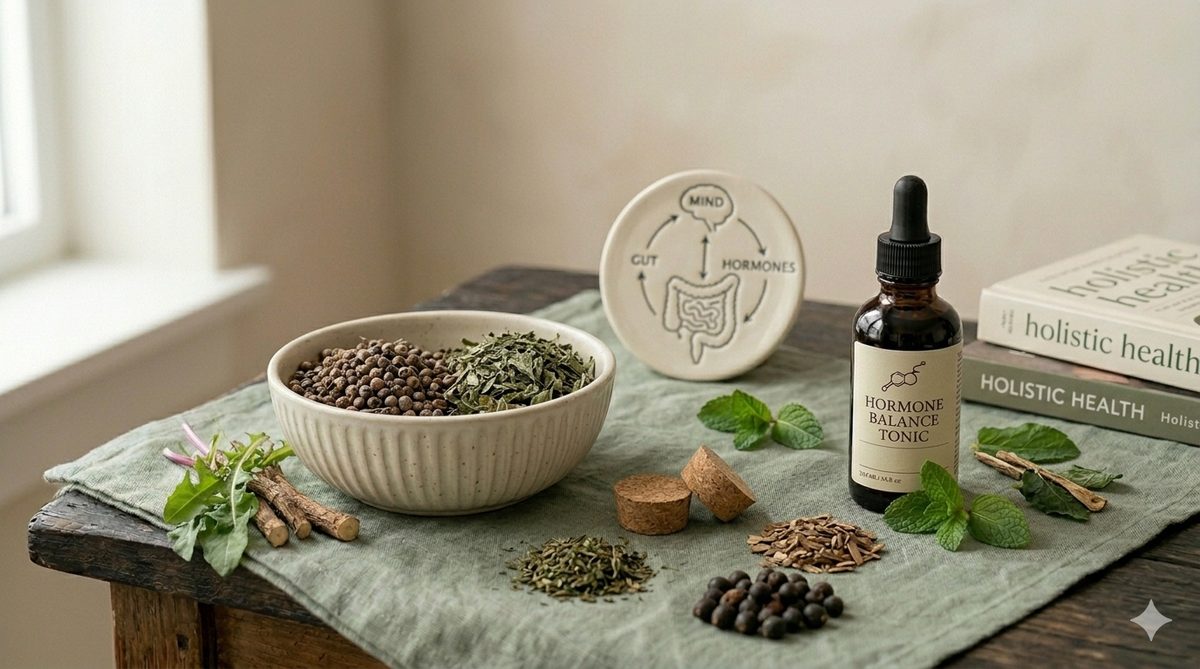
If you’re in your late 30s or 40s and you’ve started noticing changes you can’t quite explain — heavier periods, disrupted sleep, anxiety that came from nowhere, weight creeping on around the middle despite eating the same — you may be in perimenopause. As a naturopath in Sydney, I work with women navigating this transition every week, and the most common thing I hear is: “I had no idea this could start so early.”
What is perimenopause?
Perimenopause is the hormonal transition leading up to menopause. It begins when your ovaries start producing less oestrogen and progesterone, and it ends when you’ve gone 12 consecutive months without a period (which is menopause). The Australasian Menopause Society notes that perimenopause typically lasts 4–8 years, though for some women the transition is shorter or longer.
The key thing to understand is that perimenopause isn’t a sudden event. It’s a gradual, often erratic hormonal shift. Your oestrogen levels don’t simply decline in a straight line — they fluctuate wildly, sometimes spiking higher than normal before dropping. This volatility is what drives the unpredictable symptoms.
Common perimenopause symptoms
Perimenopause can affect virtually every system in your body, because oestrogen and progesterone receptors are found in your brain, bones, gut, skin, heart, and immune system — not just your reproductive organs.
Hormonal and menstrual changes
Irregular periods are often the first sign. Cycles may become shorter, longer, heavier, lighter, or skip entirely. You may experience spotting between periods or premenstrual symptoms that intensify. These changes reflect the fluctuating balance between oestrogen and progesterone as ovulation becomes less predictable.
Sleep disruption and night sweats
Falling progesterone — your body’s natural calming hormone — directly impacts sleep quality. Many perimenopausal women describe waking between 2–4am, difficulty falling asleep, or waking drenched in sweat. Research published in Sleep Medicine Reviews confirms that hormonal changes during the menopausal transition significantly alter sleep architecture, with up to 60% of perimenopausal women reporting sleep difficulties.
Mood changes and anxiety
Oestrogen modulates serotonin and GABA — two neurotransmitters central to mood regulation. When oestrogen fluctuates erratically during perimenopause, many women experience new-onset anxiety, irritability, tearfulness, or low mood that they’ve never experienced before. A 2023 review in The Lancet (Newson et al.) emphasised that perimenopausal mood symptoms are hormonally driven and often misdiagnosed as anxiety or depression.
Weight gain and metabolic shifts
Declining oestrogen shifts fat distribution toward the abdomen and reduces insulin sensitivity. Many women notice weight gain — particularly around the waist — despite no changes to diet or exercise. This isn’t a failure of willpower; it’s a metabolic shift driven by changing hormones and often compounded by disrupted sleep and elevated cortisol.
Brain fog and fatigue
Oestrogen supports cognitive function, and its fluctuation during perimenopause can cause difficulty concentrating, word-finding problems, and mental fatigue. These symptoms are often the most distressing because they feel like “something is wrong” — but they’re a well-documented feature of the hormonal transition.
Other common symptoms
Hot flushes and vasomotor symptoms, joint pain and stiffness, headaches or migraines (especially premenstrual), changes in skin and hair texture, reduced libido, and increased urinary frequency are all common during perimenopause and relate to declining oestrogen and progesterone levels across different body systems.
How a naturopath supports perimenopause
Naturopathic care for perimenopause focuses on supporting your body’s ability to adapt to changing hormone levels, rather than simply suppressing symptoms. My approach is to identify which hormonal shifts are driving your specific symptoms and address them through targeted herbal medicine, nutrition, and lifestyle adjustments.
Herbal medicine
Specific herbs have strong traditional and research-supported use in perimenopause. I commonly use herbs that support oestrogen metabolism, modulate the HPO axis, calm the nervous system, and reduce vasomotor symptoms. Each formula is tailored to the individual — a woman with predominant anxiety and sleep issues needs different support than one with hot flushes and weight gain.
Dietary adjustments
Nutrition plays a central role in managing perimenopause. Phytoestrogen-rich foods (flaxseeds, fermented soy, legumes), anti-inflammatory foods (oily fish, turmeric, berries), and adequate protein for muscle maintenance all become more important during this transition. I also assess blood sugar management, as insulin resistance often worsens during perimenopause and drives both weight gain and mood instability.
Nutrient support
Key nutrients during perimenopause include magnesium (for sleep, mood, and muscle function), B vitamins (for energy and nervous system support), vitamin D (for bone density and immune function), and omega-3 fatty acids (for inflammation and cognitive function). I assess these through pathology testing and targeted supplementation.
Stress and adrenal support
As your ovaries produce less oestrogen, your adrenal glands become a more important source of hormones. If you’re chronically stressed, your adrenals are already taxed — which can make perimenopausal symptoms significantly worse. Addressing stress, cortisol, and adrenal health is often the single most impactful intervention during this transition.
When to seek support
Don’t wait until symptoms are severe. The earlier you begin supporting your body through perimenopause, the smoother the transition tends to be. If you’re noticing changes in your cycle, sleep, mood, energy, or weight that don’t have an obvious explanation — and you’re in your late 30s or 40s — perimenopause is worth investigating.
A comprehensive naturopathic consultation will assess your hormonal picture, thyroid function, adrenal health, gut health, and nutrient status to build a plan that’s specific to where you are in the transition.
Perimenopause doesn’t have to mean years of feeling unlike yourself. If you’re ready to understand what’s happening and take a proactive approach, get in touch to start the conversation.

About the Author
Samantha Jane is a qualified naturopath (Adv. Dip. Naturopathy, Nature Care College) and ATMS member based in Lane Cove on Sydney’s North Shore. With over 20 years of health industry experience and personal experience managing PCOS — including three successful pregnancies after being told she would struggle to conceive — Samantha brings both clinical expertise and genuine understanding to every consultation.
Read Samantha’s full story →