If your acne clusters along the jawline, chin, and lower cheeks — and tends to flare before your period — it's almost certainly hormonal. This pattern is one of the most recognisable presentations in naturopathic practice, and it tells us something specific about what's happening inside your body.
Why the jawline?
The skin along your jaw and chin has a higher concentration of androgen receptors than other areas of your face. Research published in the *Journal of Dermatological Treatment* (Del Rosso & Kircik, 2024) confirms that androgens locally synthesised in the skin directly stimulate sebum production and follicular hyperkeratinisation — and that the lower face and jawline are particularly susceptible due to the density of these hormone receptors. When androgens (testosterone and DHT) are elevated — or when your skin is more sensitive to normal androgen levels — these receptors are activated, leading to increased oil production, clogged pores, and inflammation in this specific zone.
Common hormonal drivers
Excess androgens
This is the most direct cause. Conditions like PCOS, adrenal stress, and post-pill androgen rebound all elevate androgen levels. If your jawline acne is accompanied by irregular periods, hair thinning, or difficulty losing weight, PCOS may be worth investigating.
Oestrogen-progesterone imbalance
Low progesterone relative to oestrogen (often called oestrogen dominance) can allow androgens to have a more pronounced effect. This is common in women with luteal phase defects, anovulatory cycles, or those coming off hormonal contraception.
Insulin resistance
Elevated insulin stimulates androgen production. Even if your androgens aren't dramatically high, insulin-driven increases can be enough to trigger jawline breakouts. Blood sugar management through diet is often the first step in treatment.
Gut health
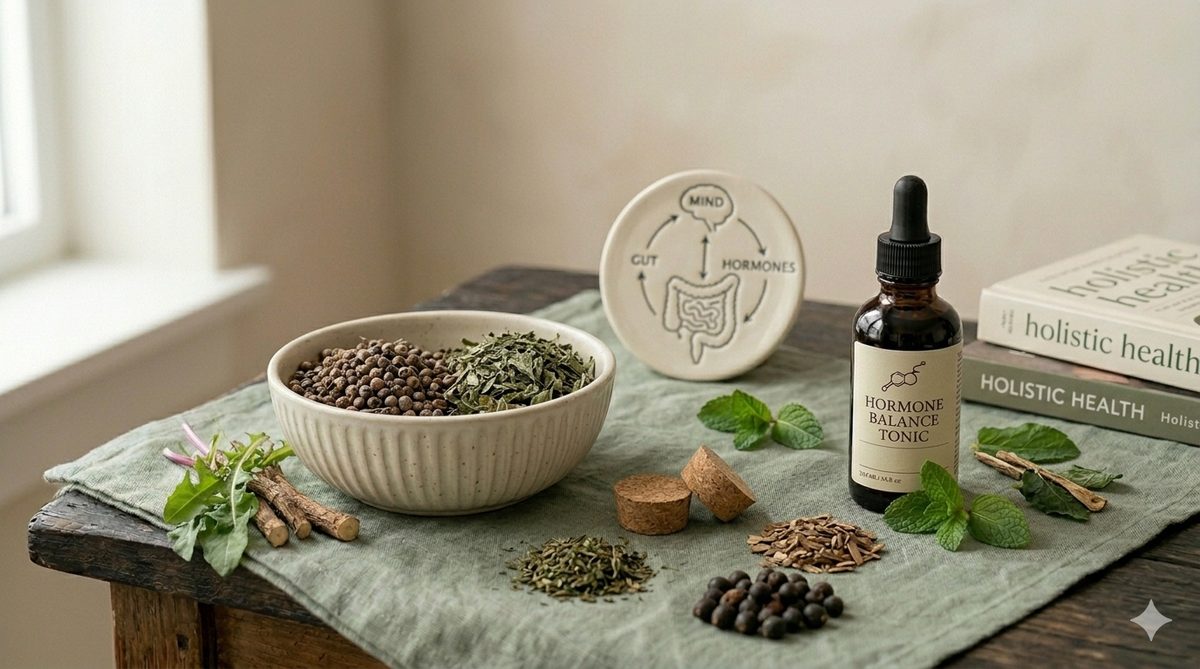
Your gut plays a role in hormone metabolism through what's known as the estrobolome — a collection of gut bacteria that influence how oestrogen is processed. When gut health is compromised, hormone clearance is impaired, contributing to imbalance. Many of my clients with stubborn hormonal acne see significant improvement when we address their digestion. Read more about the gut-skin connection.
Stress and cortisol
Chronic stress increases adrenal androgen production (DHEA-S) and can worsen acne independently of ovarian hormones. If your breakouts correlate with stressful periods, adrenal support is an important part of treatment.
How I treat hormonal acne
Rather than suppressing symptoms with the pill or harsh topicals, I work to identify and address the specific hormonal driver in your case. Treatment typically includes dietary changes to stabilise blood sugar, herbal medicine to support hormonal balance and reduce androgen activity, gut health support, and targeted nutrients like zinc and vitamin A.
Results take time — skin cell turnover is approximately 28 days, so meaningful improvement typically begins at four to eight weeks, with continued progress over three to six months.
Acne can be incredibly frustrating, especially when conventional approaches haven't worked. If you're dealing with persistent jawline breakouts, get in touch — I can help you understand what's driving them.

About the Author
Samantha Jane is a qualified naturopath (Adv. Dip. Naturopathy, Nature Care College) and ATMS member based in Lane Cove on Sydney’s North Shore. With over 20 years of health industry experience and personal experience managing PCOS — including three successful pregnancies after being told she would struggle to conceive — Samantha brings both clinical expertise and genuine understanding to every consultation.
Read Samantha’s full story →