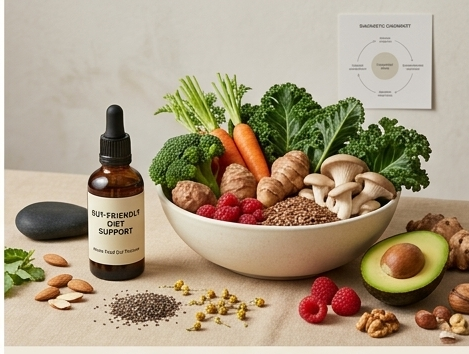
Your gut health is shaped more by what you eat every day than by any supplement you can take. While specific conditions may require targeted treatment, the foundation of a healthy digestive system is always your diet. Here's a practical guide to eating for better gut health — not a restrictive plan, but a way of eating that supports your digestion, feeds your beneficial bacteria, and reduces inflammation.
Foods that support your gut
Prebiotic-rich foods
Prebiotics are types of fibre that feed your beneficial gut bacteria. They're found in foods like garlic, onion, leek, asparagus, bananas (especially slightly green), oats, artichoke, and legumes. Including a variety of these foods daily is one of the most effective ways to support a diverse, healthy microbiome.
Fermented foods
Naturally fermented foods introduce beneficial bacteria to your gut. Good options include sauerkraut (unpasteurised), kimchi, kefir, natural yoghurt (if tolerated), miso, and kombucha. A small serving daily is more effective than occasional large amounts.
Anti-inflammatory foods
Chronic gut inflammation drives many digestive symptoms. Omega-3 rich foods (wild-caught oily fish, chia seeds, walnuts, flaxseeds), turmeric, ginger, and colourful vegetables all help reduce inflammation in the digestive tract.
Bone broth and collagen-rich foods
Bone broth provides glutamine, gelatin, and collagen — all of which support gut lining integrity. If intestinal permeability ("leaky gut") is a concern, regular consumption of bone broth or a quality collagen supplement can support repair.
Fibre diversity
Aim for 30 different plant foods per week. This sounds like a lot, but it includes vegetables, fruits, nuts, seeds, herbs, spices, and grains. Microbial diversity in your gut is directly linked to the diversity of plants you eat. A landmark 2024 study in *Nature Medicine* analysing over 10,000 participants found that diet significantly predicted microbial diversity and the relative abundance of 92% of gut bacterial species tested — confirming that what you eat is one of the most powerful levers for shaping your microbiome (Godneva et al., *Nature Medicine*, 2026). Each type of fibre feeds different bacterial species.
Foods to be mindful of
Highly processed foods
Processed foods are typically low in fibre, high in refined sugars and seed oils, and contain emulsifiers and preservatives that can disrupt gut bacteria and damage the intestinal lining.
Excess sugar and refined carbohydrates
Sugar feeds opportunistic bacteria and yeast (including candida) at the expense of beneficial species. Reducing refined sugar is one of the most impactful dietary changes for gut health.
Alcohol
Even moderate alcohol consumption damages the gut lining, disrupts the microbiome, and increases intestinal permeability. Reducing alcohol is particularly important if you're dealing with active gut issues.
Individual triggers
Some foods that are generally "healthy" may not suit your individual gut. Common triggers include dairy, gluten, certain FODMAPs, and nightshade vegetables. Rather than eliminating everything, I help clients identify their specific sensitivities through structured assessment.
The most important principle
Consistency matters more than perfection. You don't need to eat perfectly — you need to eat well, most of the time, and choose foods that support your gut rather than work against it. Small, sustainable changes compound over weeks and months into significant improvements in how you feel.
If you'd like personalised dietary guidance based on your specific digestive symptoms, get in touch to book a consultation.

About the Author
Samantha Jane is a qualified naturopath (Adv. Dip. Naturopathy, Nature Care College) and ATMS member based in Lane Cove on Sydney’s North Shore. With over 20 years of health industry experience and personal experience managing PCOS — including three successful pregnancies after being told she would struggle to conceive — Samantha brings both clinical expertise and genuine understanding to every consultation.
Read Samantha’s full story →